Your Privacy Choices
As described in our Privacy Policy, we collect personal information from your interactions with us and our website, including through cookies and similar technologies. We may also share this personal information with third parties, including advertising partners. We do this in order to show you ads on other websites that are more relevant to your interests and for other reasons outlined in our privacy policy.
Sharing of personal information for targeted advertising based on your interaction on different websites may be considered "sales", "sharing", or "targeted advertising" under certain U.S. state privacy laws. Depending on where you live, you may have the right to opt out of these activities. If you would like to exercise this opt-out right, please follow the instructions below.
If you visit our website with the Global Privacy Control opt-out preference signal enabled, depending on where you are, we will treat this as a request to opt-out of activity that may be considered a “sale” or “sharing” of personal information or other uses that may be considered targeted advertising for the device and browser you used to visit our website.
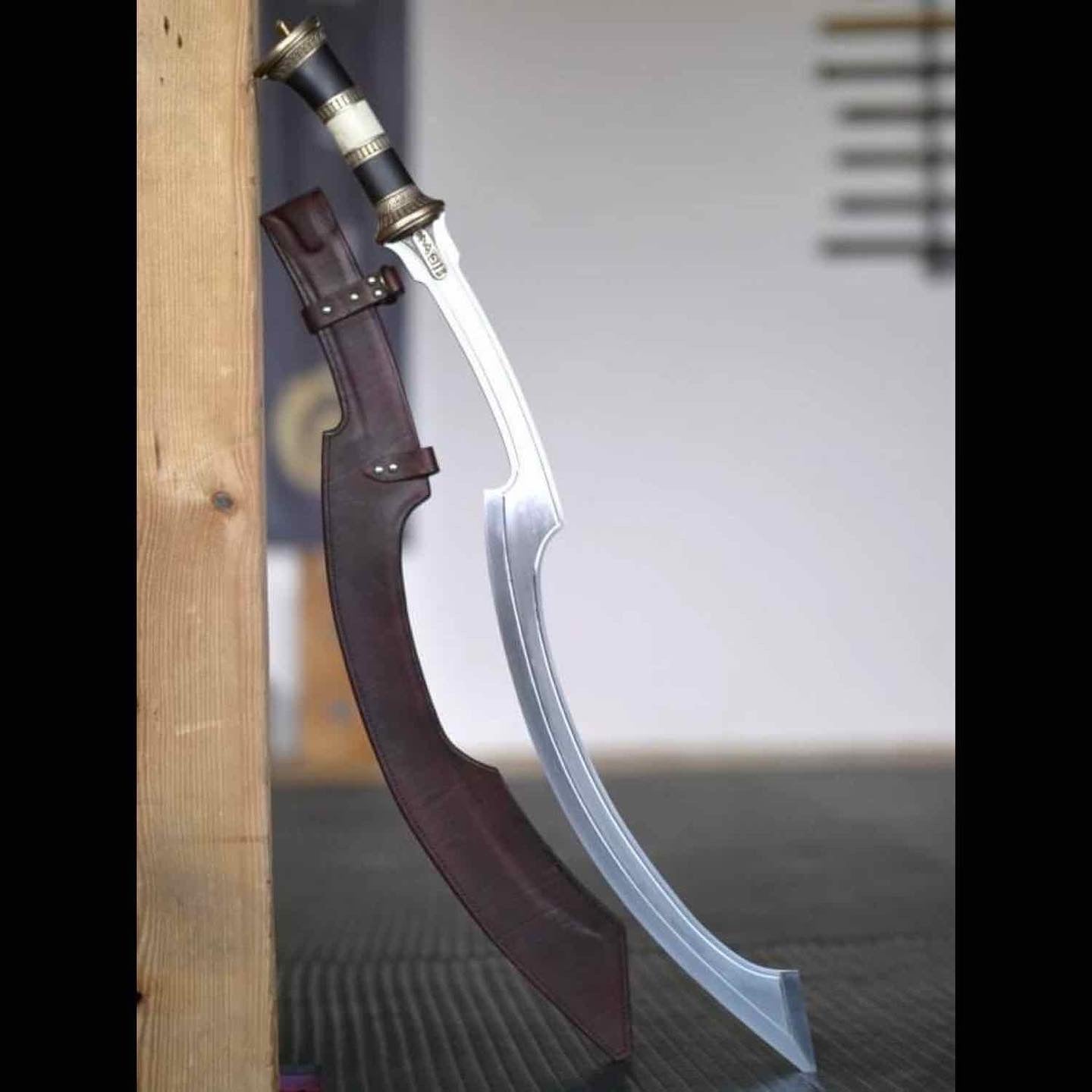
Born from a boyhood dream..
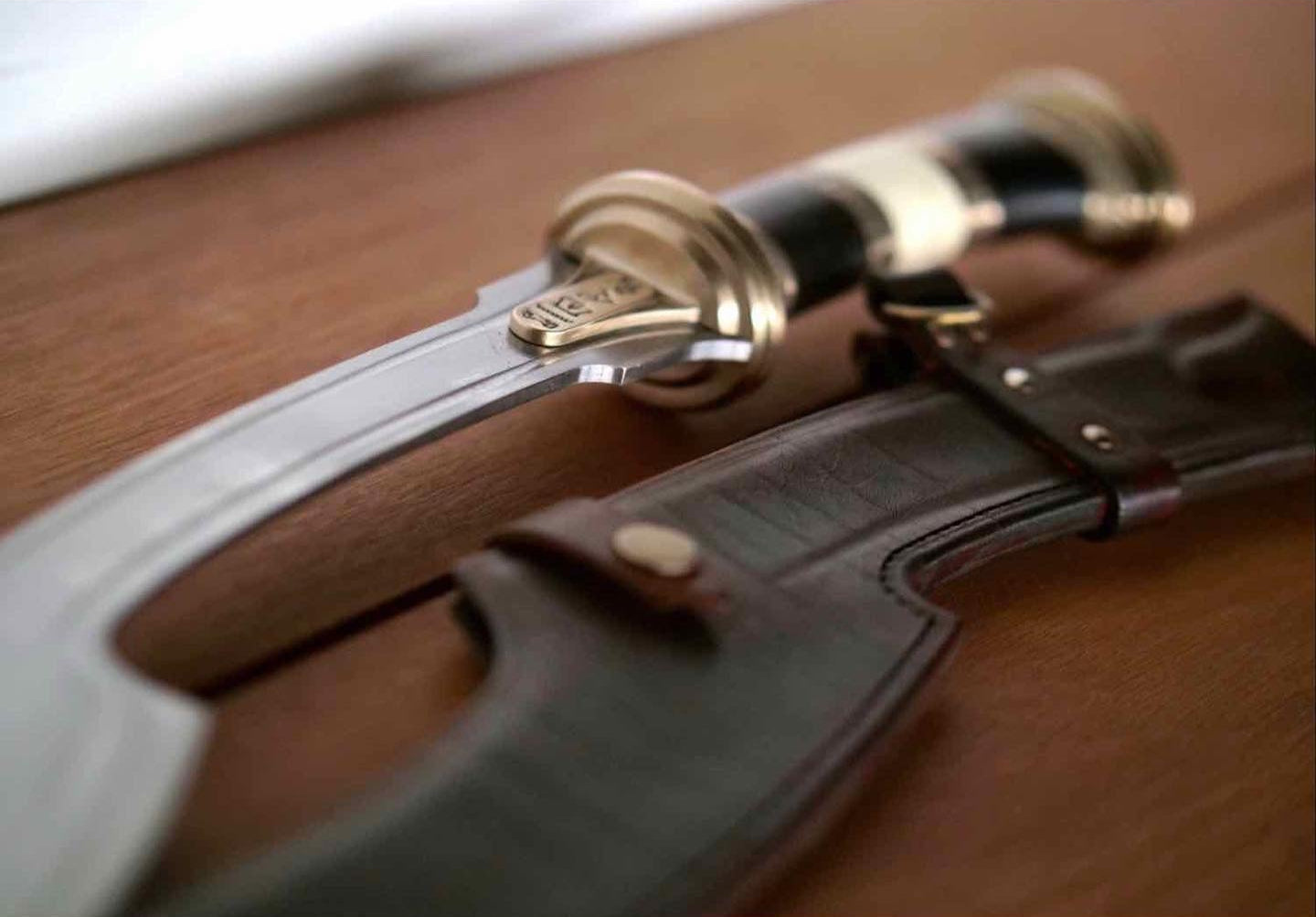
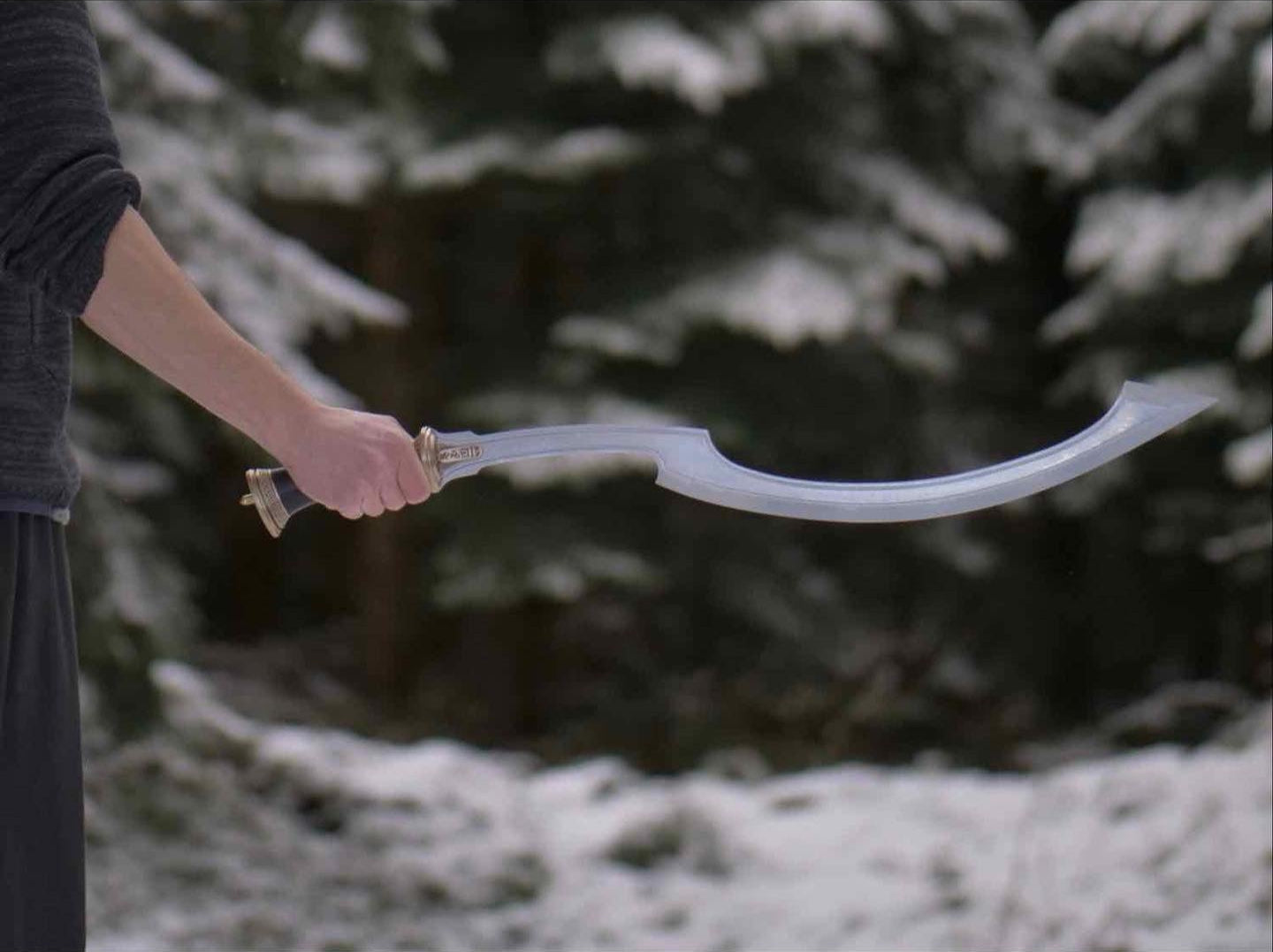
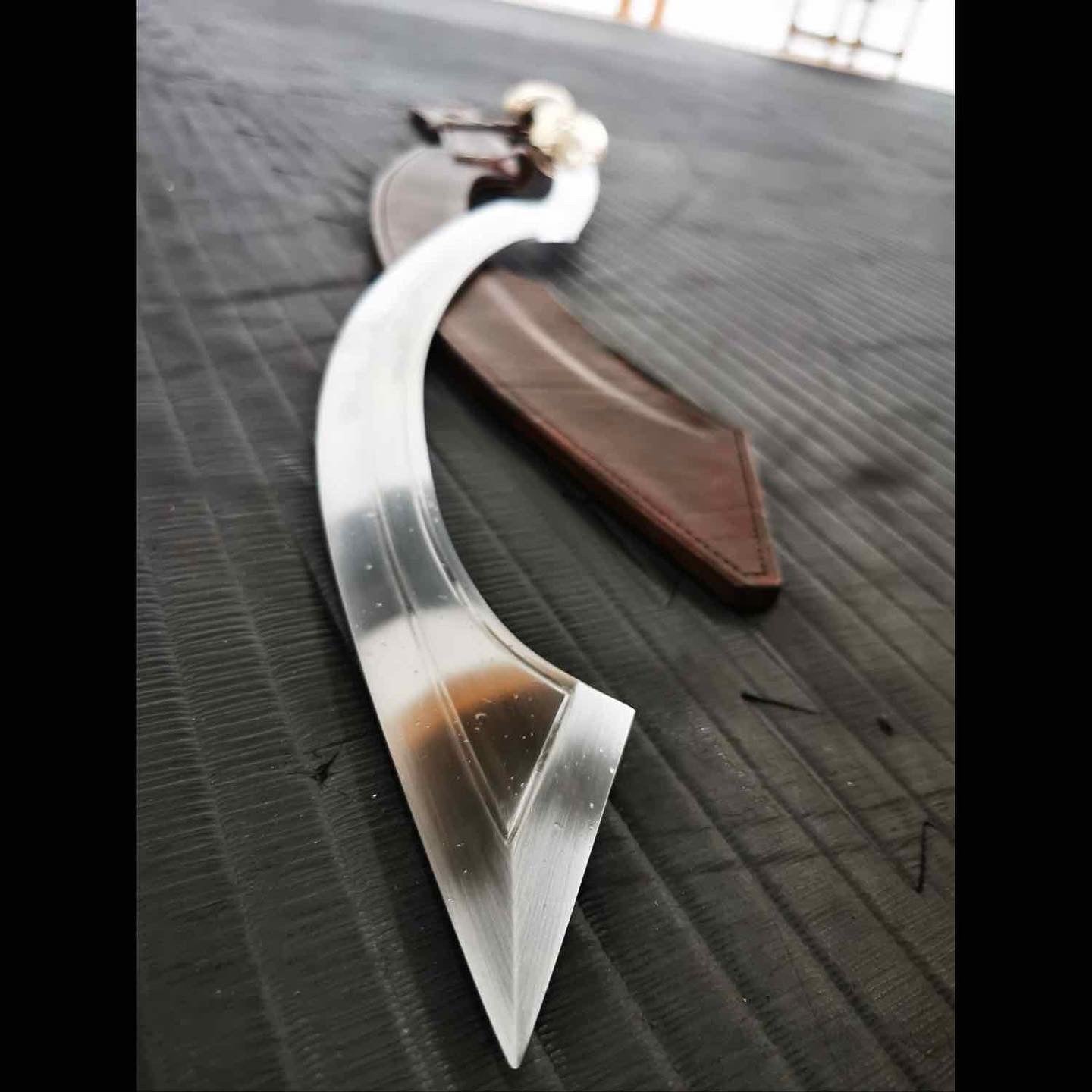
A lifelong Egyptophile, Joël had always dreamt of owning his own Khopesh - the archetypal ancient Egyptian weapon. His knowledge of this era combined with an exceptional passion and skill in Chinese martial arts and swordplay, enabled us to collaborate on the creation of this extraordinary piece.
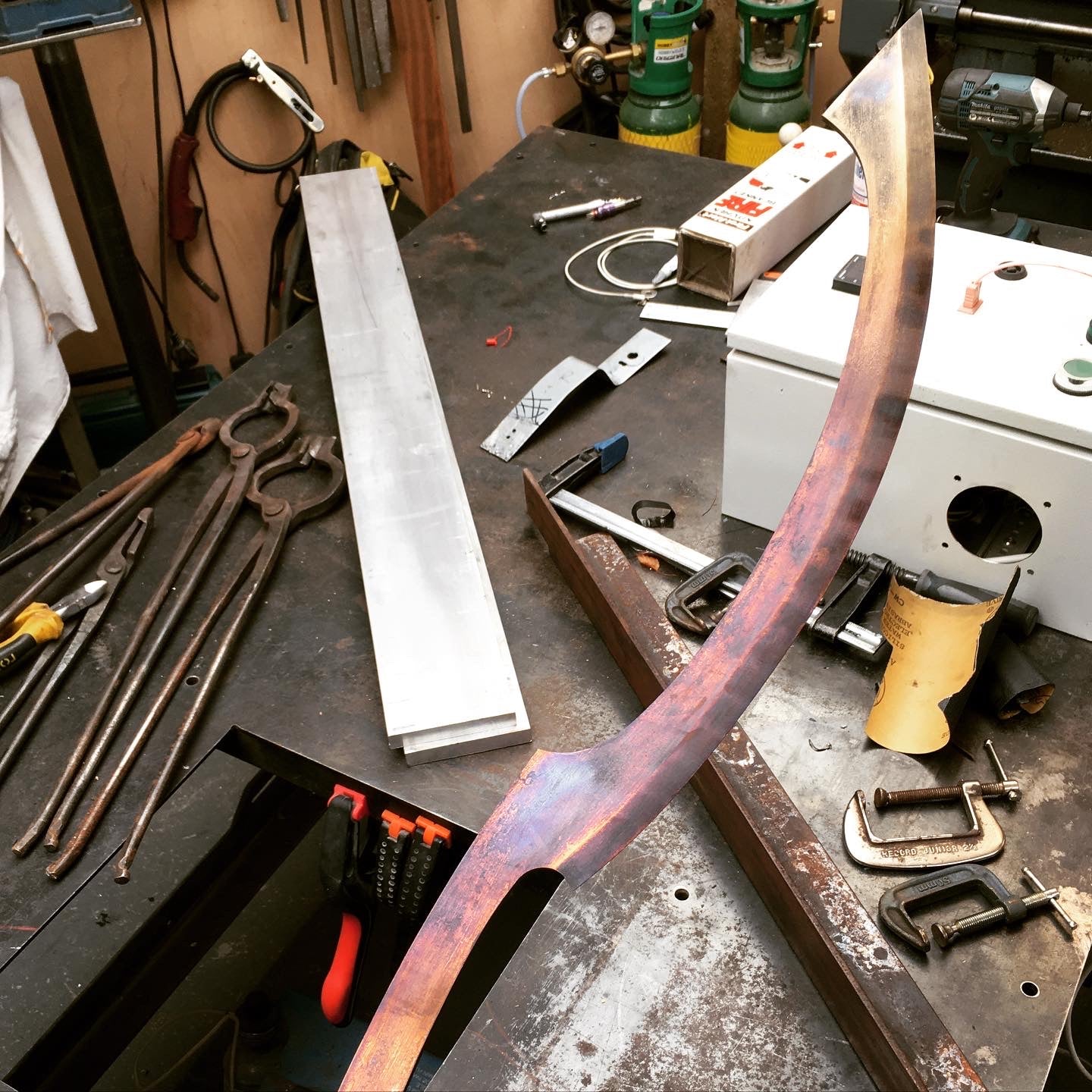
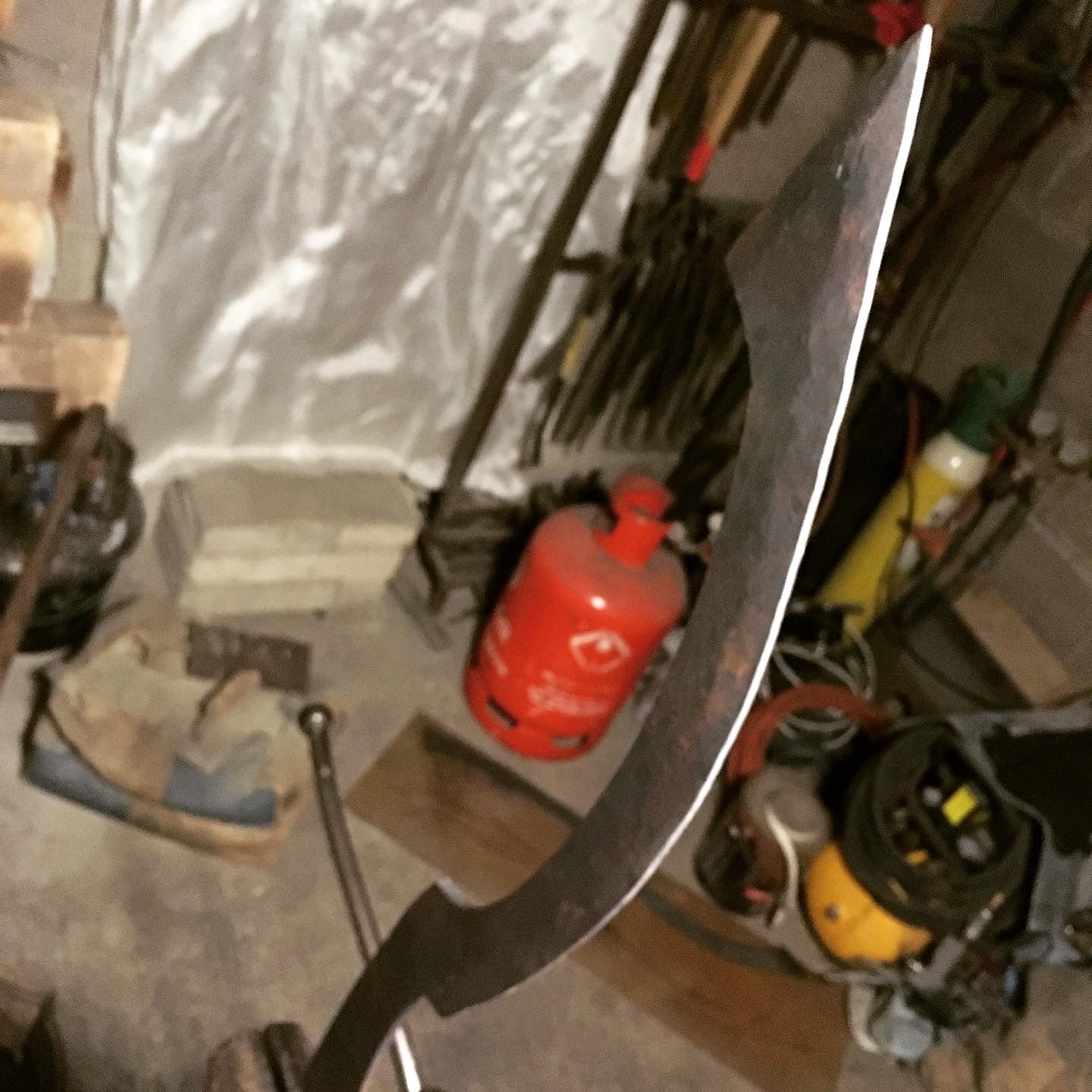
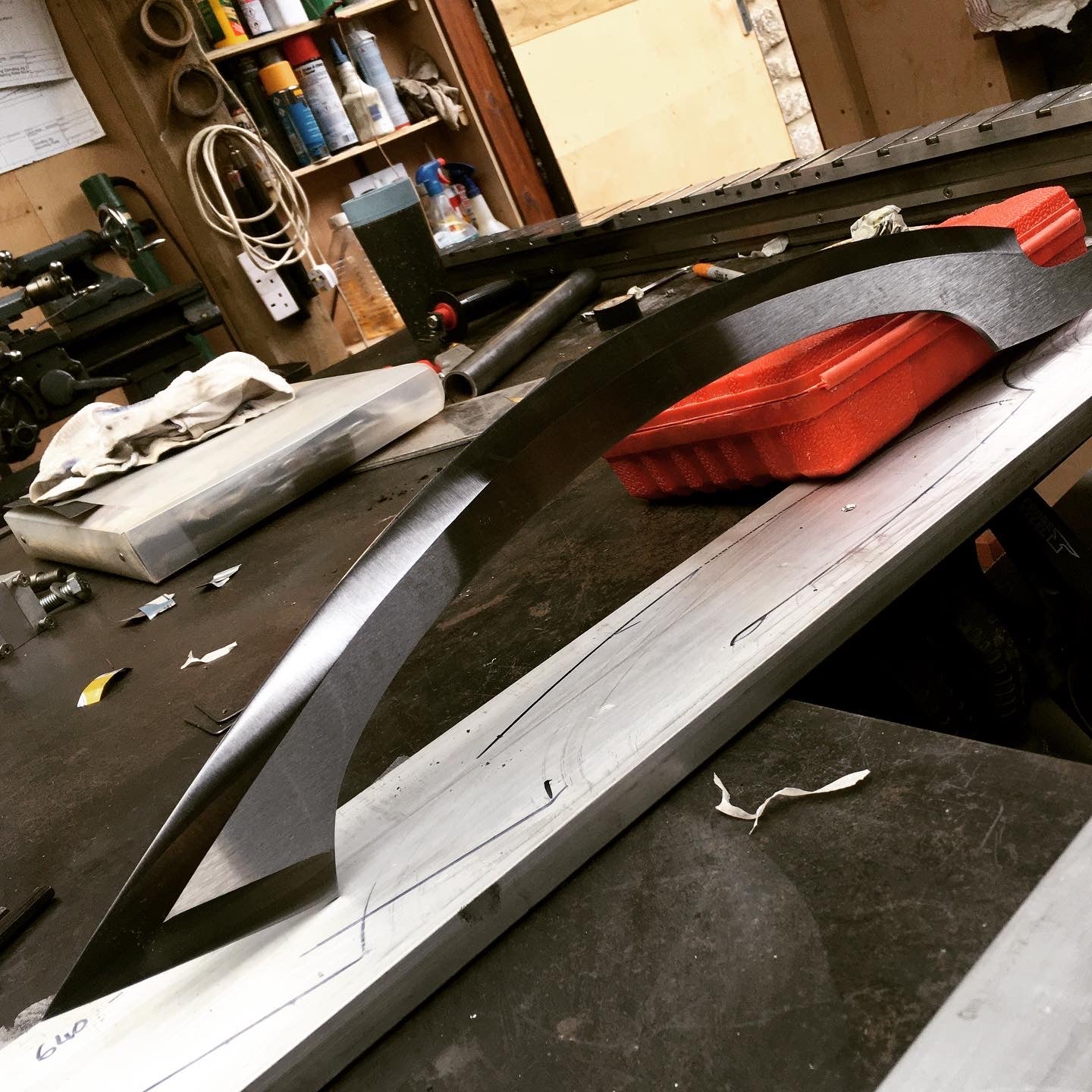
The blade, based on historical examples from the Egyptian New Kingdom era (1550 to 1069 B.C.) was hand forged from en45 spring steel, hardened and drawn back to a spring temper. It was then distal tapered across its length and bevels ground on the belly and back edge of the tip. The fullers, which follow the lines of the blade profile, were hand carved using a custom carbide scraper, not dissimilar to those used for carving the fullers in Katana.
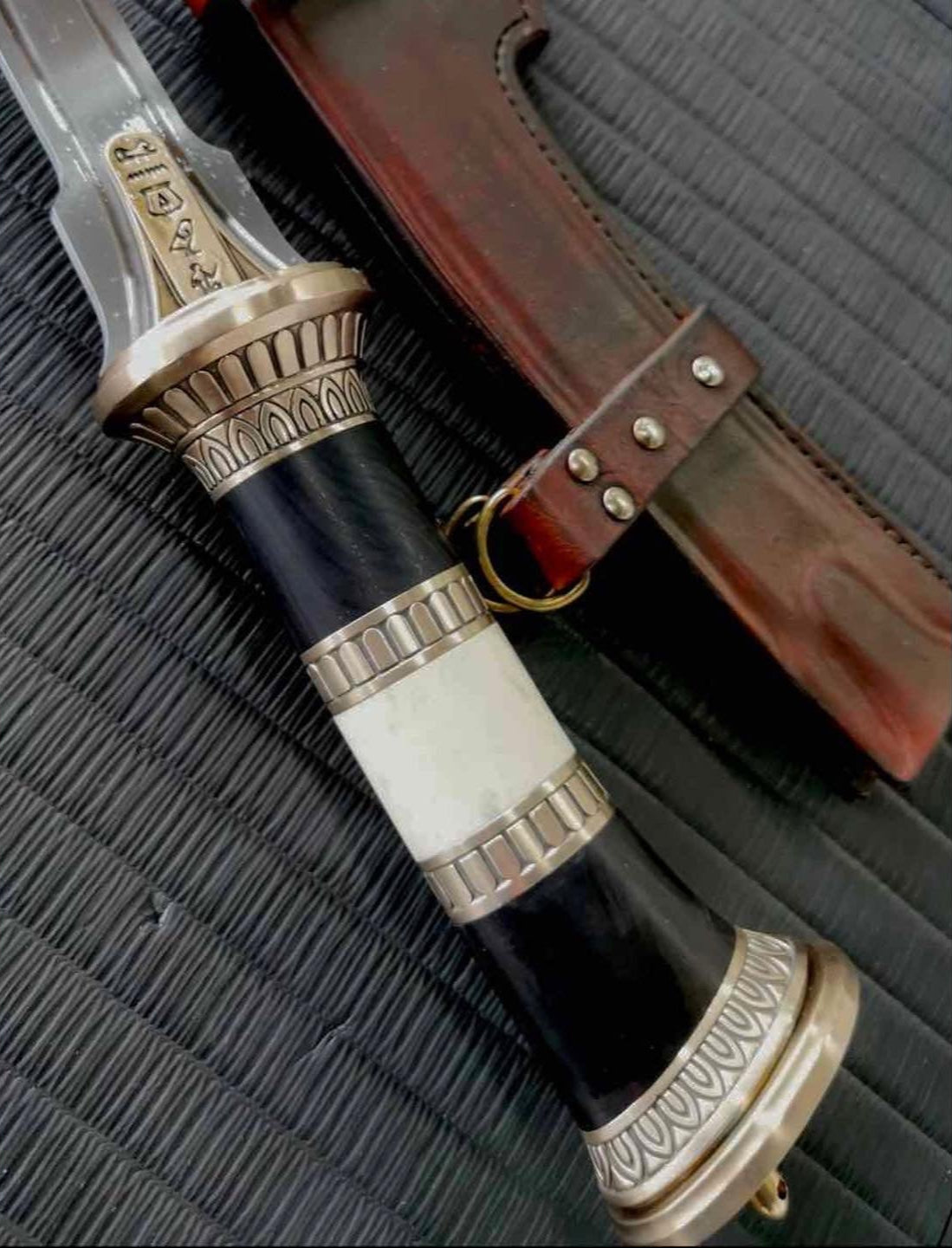
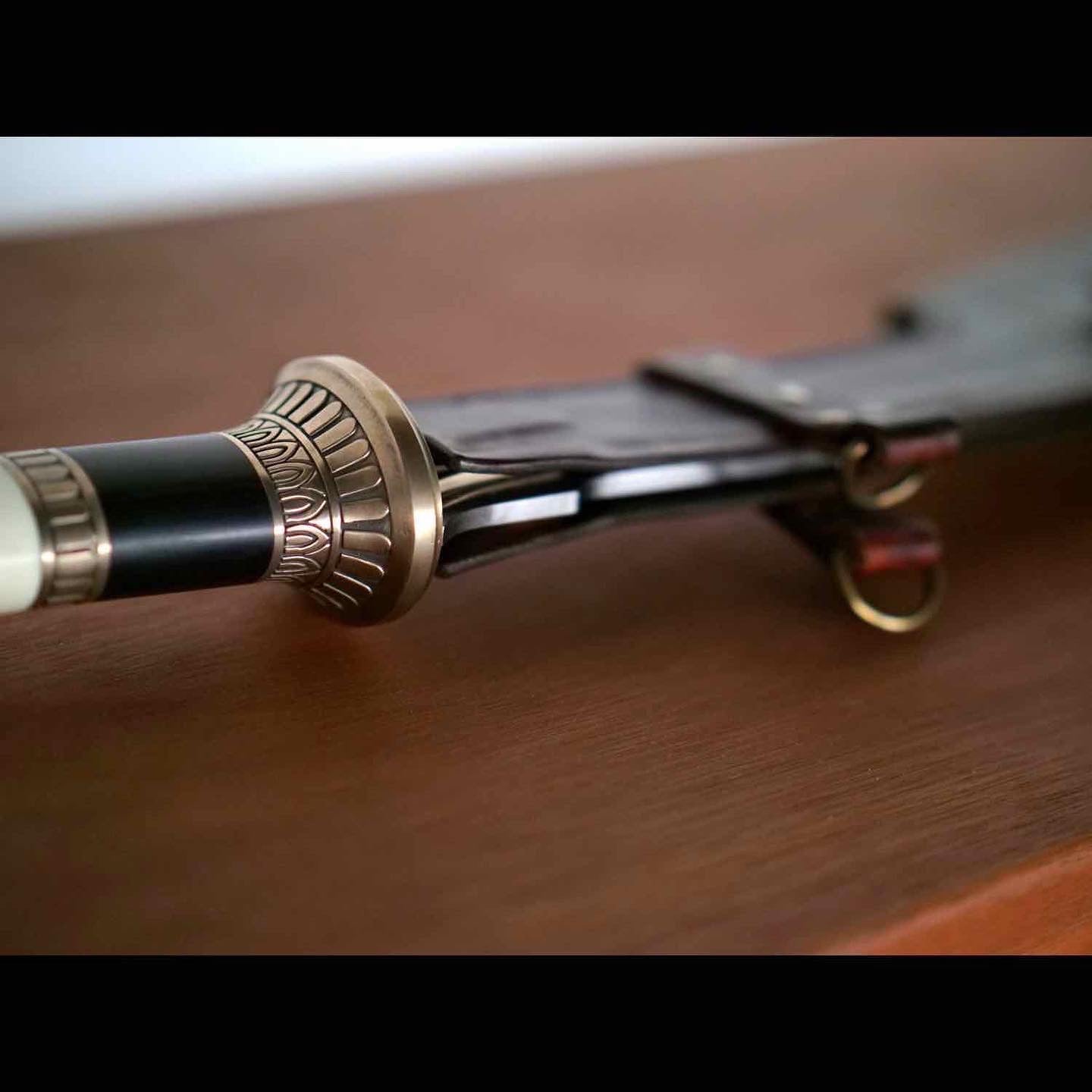
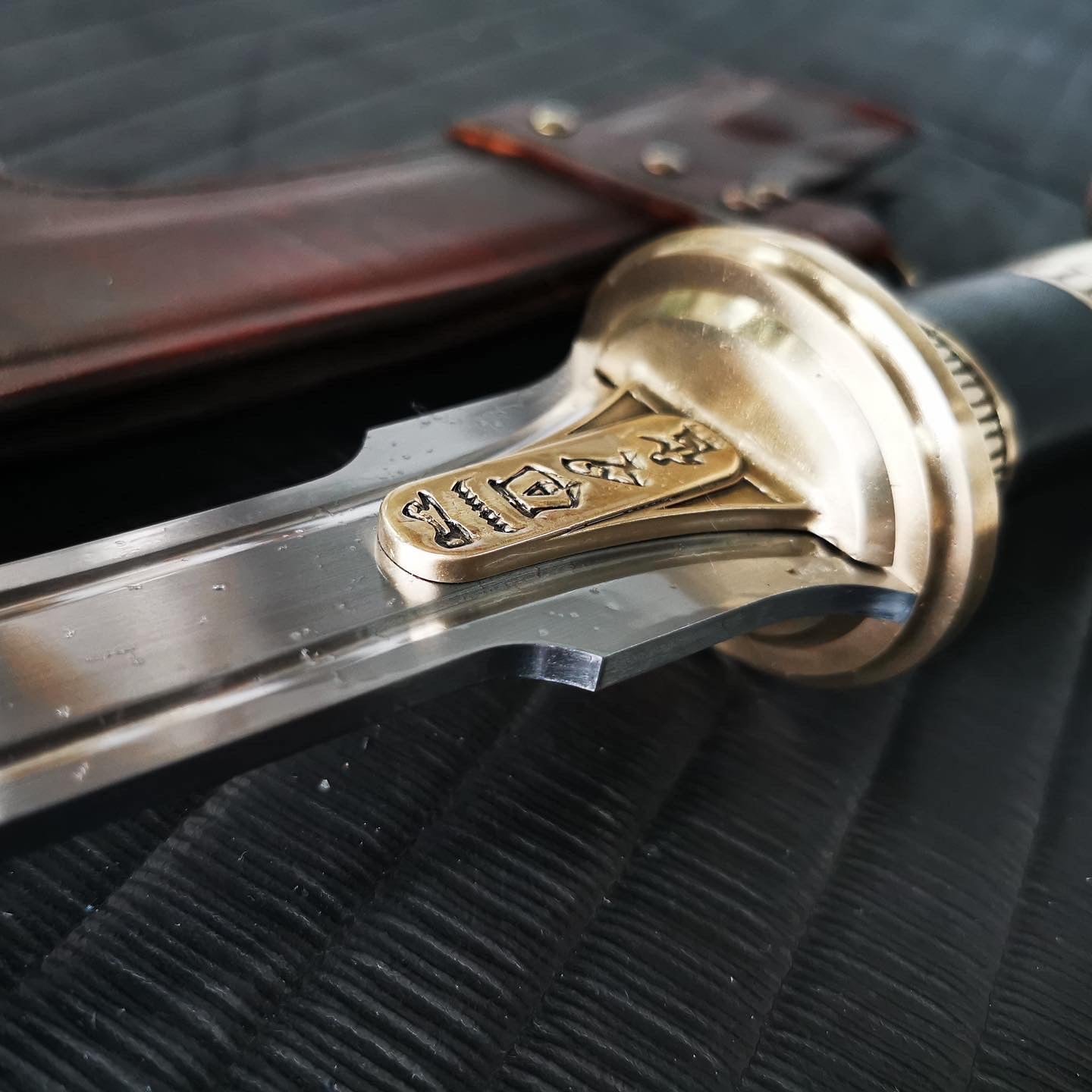
The hilt consists of a sandwich of bronze guard, pommel and spacers with two pieces of African Blackwood and one section of deer antler in the centre. The bronze castings are adorned with classic Egyptian patterns, sketched by Joël and then modelled in a CAD program, before being resin 3D printed as patterns for casting using the lost wax method. The bronze cartouche which extends up the base of the blade from the hilt carries Joël's name in hieroglyphics. It was cast as a separate piece and then brazed onto the top of the guard.
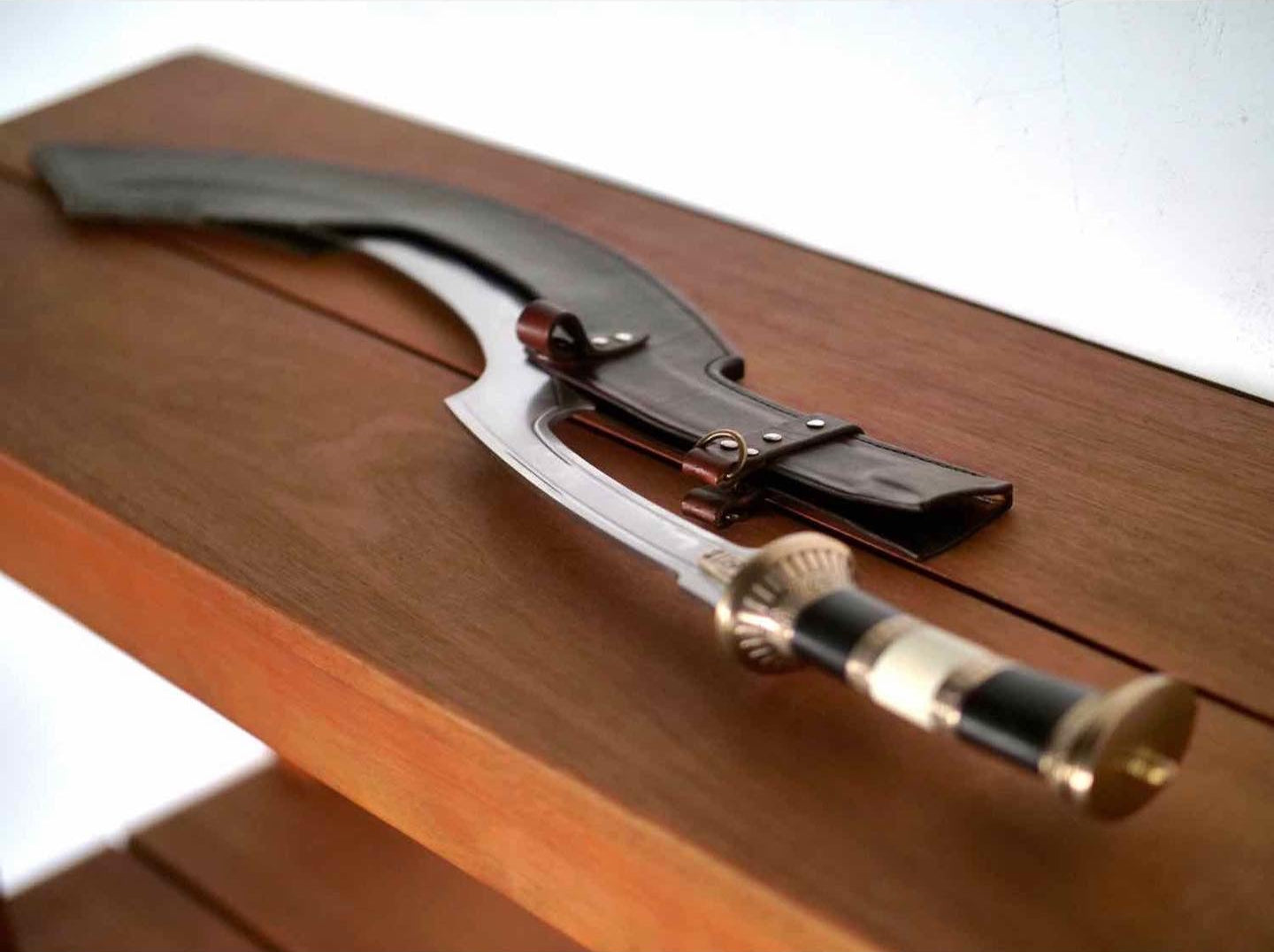
The split sheath takes inspiration from examples of Chinese sabre sheaths such as those used by some infantrymen during the boxer rebellion, which accommodated curved blades that widen through the belly towards the tip. For a blade profile as